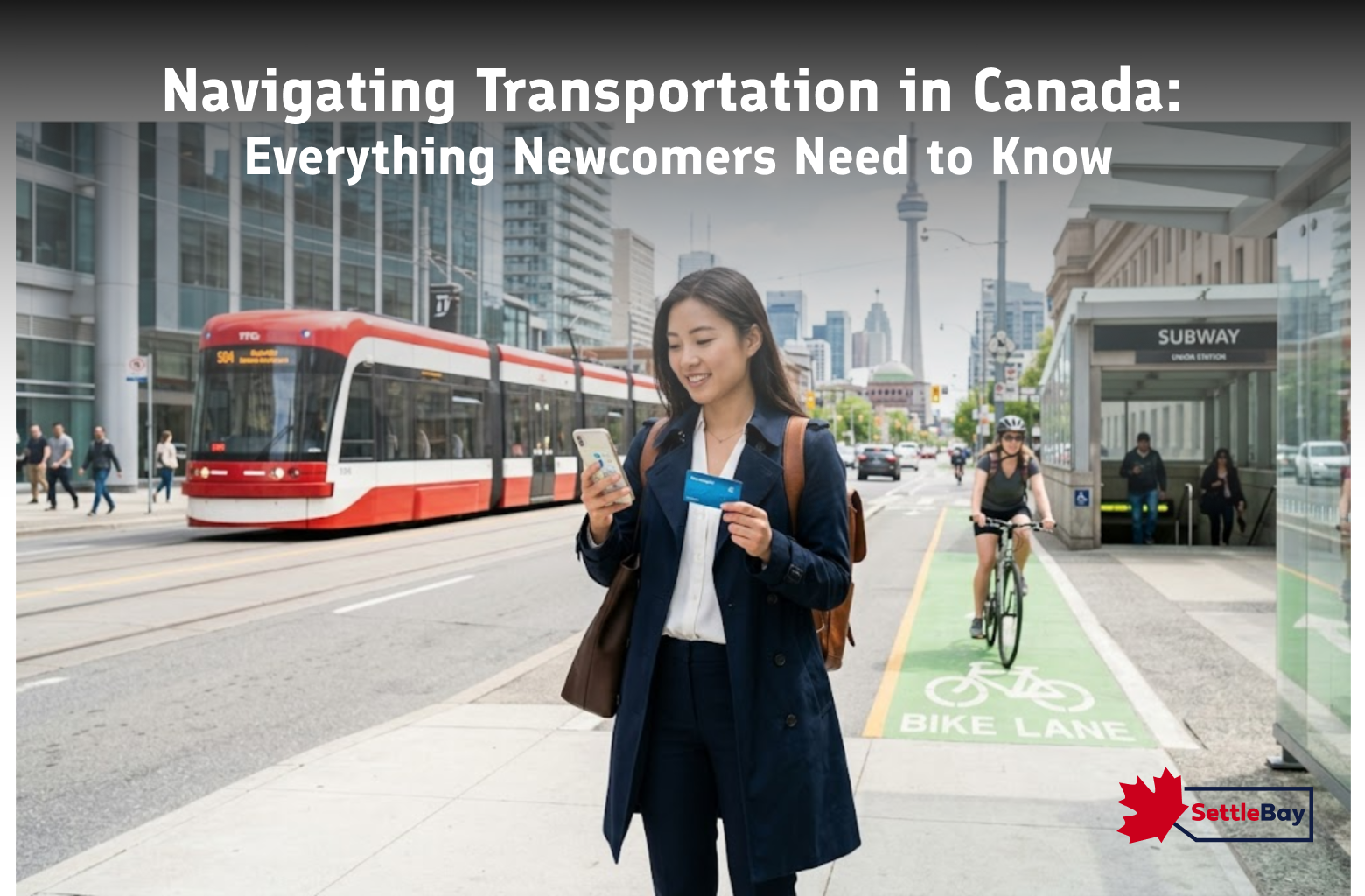

Getting around in Canada is an essential part of settling into your new life — whether you plan to drive, bike, take the bus, or use rideshares. Transportation affects your daily routine, job choices, and overall comfort in your new city.
This guide breaks down all the important information you need to navigate transportation in Canada confidently and affordably as a newcomer.
Public Transit Systems: The Most Cost‑Effective Choice
Most Canadian cities have reliable public transportation systems. These include buses, subways, streetcars, and trains.
✔ Toronto: TTC (subway, streetcar, buses)
✔ Vancouver: TransLink (buses, SkyTrain)
✔ Montreal: STM (metro, buses)
✔ Calgary: CTrain and buses
Tips for using public transit:
- Buy monthly transit passes for big savings
- Use contactless payment apps like PRESTO or Compass Card
- Plan routes with transit apps (Google Maps or local apps)
Public transit is usually cheaper and easier than owning a car, especially in big cities.
Understanding Car Ownership: Costs and Requirements
Many newcomers eventually choose to drive, especially in cities with limited transit coverage. But owning a car in Canada comes with costs:
Typical Car Costs:
- Purchase price (new or used)
- Insurance
- Fuel
- Maintenance and repairs
- Registration and taxes
Tip: Used cars are often more affordable, but always check the vehicle history before buying.
Driver’s License Essentials for Newcomers
Newcomers can often use their foreign driver’s license for a limited period (usually 60–90 days), depending on the province. After that, you may need to:
✔ Exchange your license
✔ Take a written knowledge test
✔ Pass a road test
Some countries have reciprocity agreements, meaning fewer tests are required. Always check your provincial driver licensing authority (e.g., ServiceOntario, ICBC in BC).
Cycling and Micromobility: A Healthier, Eco‑Friendly Option
Cycling is increasingly popular in many Canadian cities:
Dedicated bike lanes in cities like Vancouver, Ottawa, and Edmonton
Bike rental and sharing programs (e.g., Toronto’s Bike Share)
Safety tips for cycling in Canada:
- Wear a helmet (mandatory in many provinces)
- Follow traffic signals
- Use lights at night
Cycling can be a low‑cost and healthy way to get around.
Rideshares and Taxi Services
When public transit isn’t convenient, rideshares and taxis are widely available.
✔ Uber and Lyft operate in most major cities
✔ Taxis can be hailed or booked through apps
Cost comparison:
- Rideshares are often cheaper than taxis
- Useful for short distances and late nights
Just remember surge pricing during peak hours can increase fares.
Travel Between Cities: Trains, Buses, and Flights
Canada is vast, so intercity travel requires planning:
Long‑Distance Options:
VIA Rail: Trains between major cities
Greyhound & Regional Buses: Affordable but slower
Domestic Flights: Best for long distances
Booking early usually gets you the best prices, especially for flights.
Affordable Transportation Tips for Newcomers
Saving on transit and travel helps you stretch your budget:
Buy monthly transit passes instead of single tickets
Look for student or newcomer discounts
Carpool where possible
Track gas prices using local apps
Dealing with Winter Travel Challenges
Canadian winters can affect transportation:
Snow and ice mean slower transit
Buses may run less frequently in extreme cold
Driving requires winter tires in many provinces
Winter tips:
✔ Dress warmly and wear layers
✔ Allow extra travel time
✔ Know transit alerts for weather delays
Frequently Asked Questions (FAQs)
Q: Can I use my home country driver’s license in Canada?
A: Yes, but only for a limited time. After that, expect written and/or road tests if your country doesn’t have a licensing agreement.
Q: Are public transit passes worth it?
A: Yes — monthly passes usually cost less than daily tickets and save money in the long run.
Q: Do I need a car in Canada?
A: It depends on where you live. In big cities with transit, many newcomers manage without a car. In smaller cities or suburbs, a car may be essential.
Getting around in Canada is an essential part of settling into your new life — whether you plan to drive, bike, take the bus, or use rideshares. Transportation affects your daily routine, job choices, and overall comfort in your new city.
This guide breaks down all the important information you need to navigate transportation in Canada confidently and affordably as a newcomer.
Conclusion
Transportation in Canada doesn’t have to be confusing or expensive. Whether you’re navigating public transit, planning to drive, or choosing rideshares, this guide gives you the knowledge to travel smart, save money, and enjoy your new home with confidence.




Leave a reply